

What Type Of Animal Eats Only Meat
Carnivores: Facts About Meat Eaters
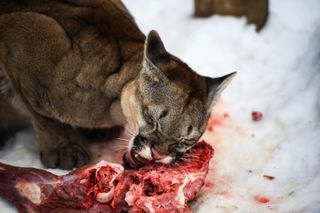
A carnivore is an creature or constitute that eats the mankind of animals. Most, merely not all, carnivorous animals are members of the Carnivora society; but, not all members of the Carnivora social club are carnivorous.
"A carnivore is just any species that eats meat, and this can range from carnivorous plants and insects to what we typically think of when we hear the discussion carnivore, similar tigers or wolves," said Kyle McCarthy, an assistant professor of wildlife ecology in the University of Delaware'southward Higher of Agronomics and Natural Resources.
Carnivora — or "mankind devourers," in Latin — is an guild of placental mammals that includes canids such equally wolves and dogs, felids (cats), ursids (bears), mustelids (weasels), procyonids (raccoons), pinnipeds (seals) and others, according to Encyclopedia Britannica. The order consists of 12 families and 270 species in all.
While some carnivores eat only meat, other carnivores also supplement their diets with vegetation on occasion. For case, about bears are omnivores, which means they eat both plants and meat, McCarthy explained.
Cannibal plants
Animals aren't the merely carnivores — there are more than than 600 species of carnivorous plants, according to the Botanical Society of America. These plants get at to the lowest degree some of their nutrients past trapping and digesting insects and sometimes fifty-fifty small frogs and mammals. Because the most common prey for most carnivorous plants are insects, these leafy mankind-eaters are also chosen insectivorous plants.
While most plants absorb nitrogen from the soil through their roots, carnivorous plants get nitrogen from animate being casualty that gets trapped in their modified leaves. The traps work in various ways. A Venus flytrap (Dionea muscipula), for case, has hinged leaves that snap shut when trigger hairs are touched. A pitcher plant has a pitfall trap; its leaves fold into deep pits filled with digestive enzymes. And sundews and butterworts have sticky mucus on their stalks that stops insects in their tracks.

Carnivore types
In that location are 3 unlike categories of carnivores based on the level of meat consumption: hypercarnivores, mesocarnivores and hypocarnivores.
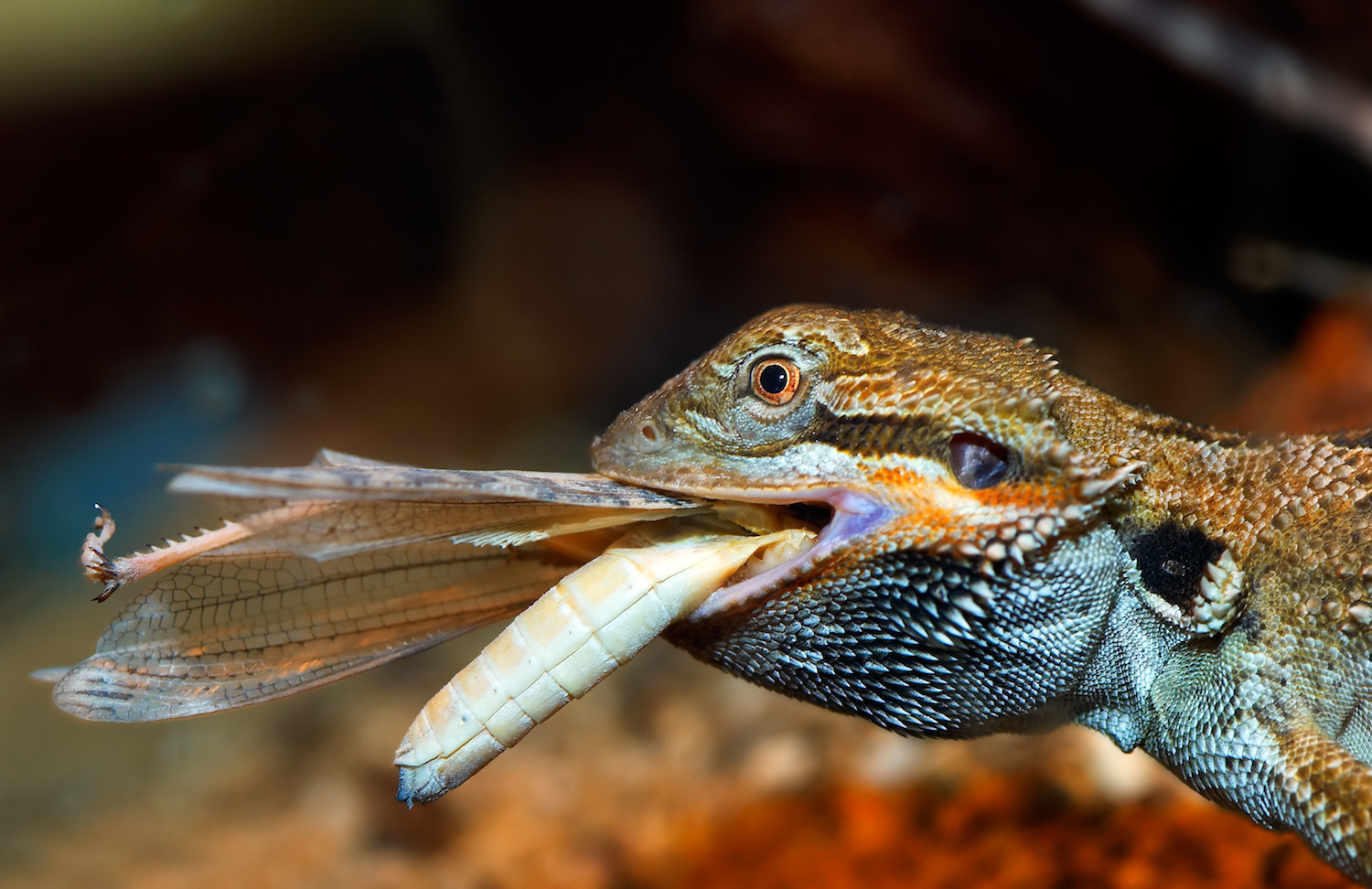
Carnivores that eat mostly meat are called hypercarnivores. These creatures are considered obligate carnivores because they cannot properly digest vegetation and have a diet that consists of at least 70 percentage meat, co-ordinate to National Geographic. The cat family, including lions, tigers and small cats, for example, are obligate carnivores, as are snakes, lizards and most amphibians.
Many hypercarnivores, including some members of the Carnivora guild, have heavy skulls with strong facial musculature to assistance in property prey, cutting mankind or grinding bones. Many likewise have a special fourth upper tooth and first lower tooth. "They close together in a shearing activity, like pair of scissors, which allows [the] animals to slice meat from their prey," said McCarthy. These two teeth together are called the carnassial teeth.
A rare case of a hypercarnivore that does not have carnassial teeth is the crabeater seal. It has teeth that strains tiny zooplankton such as krill from the water, according to the University of Michigan's Animal Diversity Web (ADW). Carnivorous baleen whales, which have no teeth at all, use a similar strategy to strain krill from sea water. Their mouths contain rows of strong, flexible baleen plates made of keratin, the same poly peptide that's in human fingernails.
Animals that depend on meat for at least 50 percent of their diet are called mesocarnivores. Along with meat, these animals volition also eat fruits, vegetables and fungi. Mesocarnivores are typically small to mid-size species and often live close to human populations. Raccoons, foxes and coyotes are examples of mesocarnivores.
Hypocarnivores are carnivores that eat the least corporeality of meat — less than 30 percent of their diet, according to National Geographic. These animals, which tin as well be considered omnivores, eat fish, berries, nuts and roots, too every bit meat.
Size
The world's largest brute is as well the globe'south largest carnivore. The blue whale (Balaenoptera musculus) grows up to 100 feet (30 meters) long and weighs up to 200 tons (180 metric tons). The largest carnivore on state is the polar bear, which can weigh 800 to 1,300 lbs. (363 to 590 kilograms), and can grow to 9 feet long (3 m) from olfactory organ to tail, according to World Wildlife Fund. The smallest cannibal mammal is the least weasel. Information technology grows no more than xvi inches long (twoscore.6 centimeters) and weighs about 7 ounces (198 grams).
Characteristics of carnivores
Though carnivores come in many shapes and sizes, they share a few similarities. Most carnivores have relatively large brains and high levels of intelligence. They as well have less complicated digestive systems than herbivores. For example, many herbivores take multiple stomachs, while carnivores just have ane, according to Encyclopedia Britannica.
Though all carnivores eat meat at some level, the frequency of their feeding can vary. Warm-blooded carnivores tend to fire a lot of calories. Because of this, they take to hunt and eat often to go along to keep up their free energy levels. Cold-blooded carnivores, on the other manus, use fewer calories and can rest days or even months between meals.
Carnivores as function of the food web
Carnivores sit down at the tertiary trophic level in the nutrient web, along with omnivores. Carnivores eat other carnivores, likewise as herbivores and omnivores, depending on their species, according to National Geographic.
As the acme tier of the nutrient spider web, carnivores keep the populations of other animals in cheque. If a carnivore population is wiped out past affliction, natural disasters, human intervention or other factors, an surface area tin experience an overpopulation of other creatures lower in the nutrient chain.
Sometimes, carnivores will be brought into an area to help with overpopulation of herbivores. For example, wolves were reintroduced to Yellowstone National Park in 1995 — after beingness eradicated from the region 70 years before — to help reduce the elk population. Somewhen, this reintroduction allowed woody plants to recover from the consumption of too many elk, according to the University of Michigan.
Further reading:
- Oxford Journals: The Ecological Role of the Mammalian Mesocarnivore
- U.S. Woods Service: The Status and Conservation of Mesocarnivores in the Sierra Nevada
- Wildlife Conservation Social club: Mesocarnivores of Northeastern North America
This commodity was updated on Dec. 4, 2018 by Live Science Senior Writer, Mindy Weisberger.
Source: https://www.livescience.com/53466-carnivore.html
Posted by: ellisamine1986.blogspot.com
0 Response to "What Type Of Animal Eats Only Meat"
Post a Comment